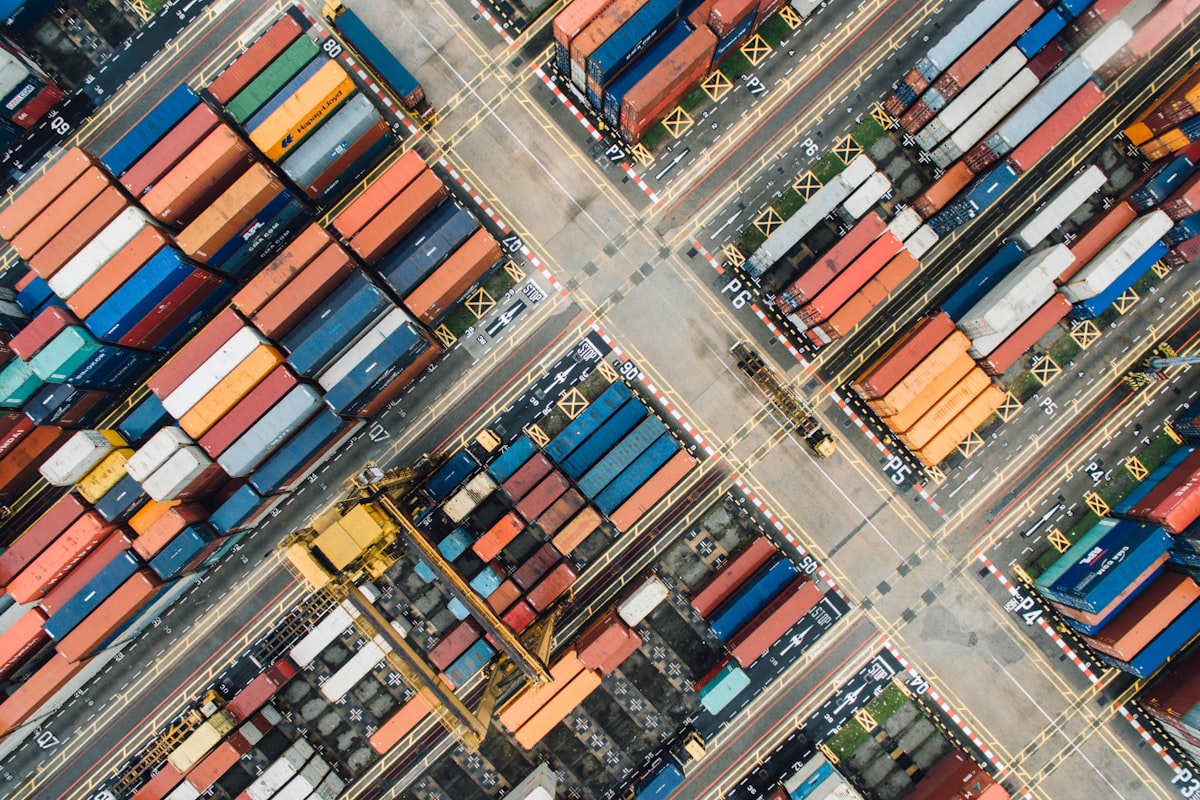
Every few months, I chair a session with a peer group of senior executives across Singapore — CEOs, COOs, VPs — who gather to think out loud about things they can’t always say publicly. No press, no PR, no polished answers. The conversations that emerge are often the most honest indicators of how business leaders are actually navigating complexity, as opposed to how their companies’ official communications describe it.
In February 2026, the session topic almost chose itself: Trump Reset — Adapting to Tariff and Geopolitical Turbulence in a Global Economy. With US trade policy shifting dramatically, new tariff regimes landing on sectors ranging from electronics to consumer goods, and the broader geopolitical landscape fragmenting further, the room had no shortage of things to grapple with.
Here’s what I heard — and what I think it means.
Tariffs Are No Longer a Risk. They’re a Feature.
The first thing that struck me was how quickly the framing shifted. Early in the conversation, someone said it plainly: “We’ve stopped treating tariffs as a disruption we’re managing through. They’re now a permanent feature of the trade environment we’re planning within.”
That’s a significant mental shift. A disruption implies a return to normalcy. What we’re seeing — US-China tensions, reshoring incentives, tariff regimes as geopolitical instruments — doesn’t look like a storm that passes. It looks like a new climate.
The practical implication is significant. If tariffs are permanent, the question isn’t “how do we weather this?” It’s “what does our supply chain architecture need to look like to be structurally viable in a tariffed world?” Those are very different questions, requiring very different answers.
The Fragmented World Requires a Fragmented Strategy
Several executives described what I’d call the “three-bloc problem.” You can no longer design a global supply chain optimised for a single global market. You’re now designing for a fragmented world with at least three distinct trading environments: the US bloc, the China bloc, and the non-aligned middle — countries like Vietnam, India, Malaysia, Indonesia, and Mexico that are actively courting manufacturing investment from both sides.
The challenge isn’t just where to source. It’s how to maintain operational coherence — governance, quality, data, compliance — across a supply network that is deliberately diversified across incompatible trade blocs. Companies that built lean, centralised supply chains over the past two decades are now discovering that the efficiency they optimised for is exactly the vulnerability they need to undo.
Compliance Is Now a Strategic Capability
This point came up repeatedly and in different forms. The executives in the room weren’t talking about compliance as a cost centre or a legal function. They were talking about it as a strategic capability — something that, if you can do it faster and better than your competitors, becomes a genuine source of competitive advantage.
The specific pressure points are real: origin certification, rules of origin under FTAs, forced labour supply chain due diligence, carbon border adjustment mechanisms coming from the EU, ESG disclosure requirements attaching to supply chain partners. The compliance burden has grown enormously, and it’s not slowing down.
One executive made a point that stuck with me: “The companies that will win in this environment are the ones that can onboard a new supplier in a compliant, documented, auditable way within 60 days. The ones that need six to nine months will consistently lose.”
Resilience Has to Mean Something More Than Inventory
A common response to supply chain disruption over the past few years has been to hold more inventory — buffer stock, safety stock, strategic reserves. That works up to a point. But the executives in the room were sceptical of inventory as a long-term resilience strategy. The working capital implications are significant. The shelf-life and obsolescence risks are real. And for companies operating in fast-moving categories, excess inventory can be as damaging as a shortage.
What the room converged on was a different model: adaptive capacity. The ability to shift volume between suppliers, reroute logistics, substitute materials, and reconfigure production in real time — not just in a crisis, but as a routine operational capability. Building that kind of adaptability requires investment in supplier relationships, digital visibility, and leadership capability that most organisations are still working toward.
The Human Dimension Nobody Talks About
I want to close with something that came up near the end of the session, and which I think deserves more attention than it typically gets.
One of the executives said, quite candidly: “The hardest part of all of this isn’t the strategy. It’s that my leadership team is exhausted. We’ve been in crisis mode, on and off, since 2020. The decisions we’re making now are genuinely hard, and the people who have to implement them are running on empty.”
The supply chain conversation is largely a strategy conversation — where to source, how to structure, what to buffer. But underneath that strategy conversation is a leadership conversation about sustained decision-making under uncertainty, about communicating clearly when clarity is impossible, and about maintaining organisational energy through years of disruption.
Those rooms — where senior leaders can think out loud together, draw on each other’s experience, and admit what they don’t know — are, I think, as valuable as any strategy framework. The best insights often aren’t about what to do. They’re about knowing you’re not the only one wrestling with the same impossible trade-offs.
I chair EGN Singapore’s Executive Leadership peer group, which brings together senior business leaders from across industries for peer learning and shared problem-solving. Sessions are held under Chatham House rules; the reflections above are my own synthesis of themes and ideas rather than direct attribution to specific individuals.