
-

The Thinking Skills AI Cannot Replace — and Why Leaders Need Them Now
AI is getting very good at the analytical layer of leadership work. What it cannot do is think systemically, challenge its own assumptions, or connect dots across domains. These are the human skills that matter most — and most leaders have never been taught them.
Read → -

The New CXO: What Senior Leaders Are Really Grappling With in the Age of AI
I co-chaired a session for senior Singapore executives on what leadership looks like when AI can automate more and more of the work. The question that kept surfacing wasn't about the technology. It was about the humans.
Read → -
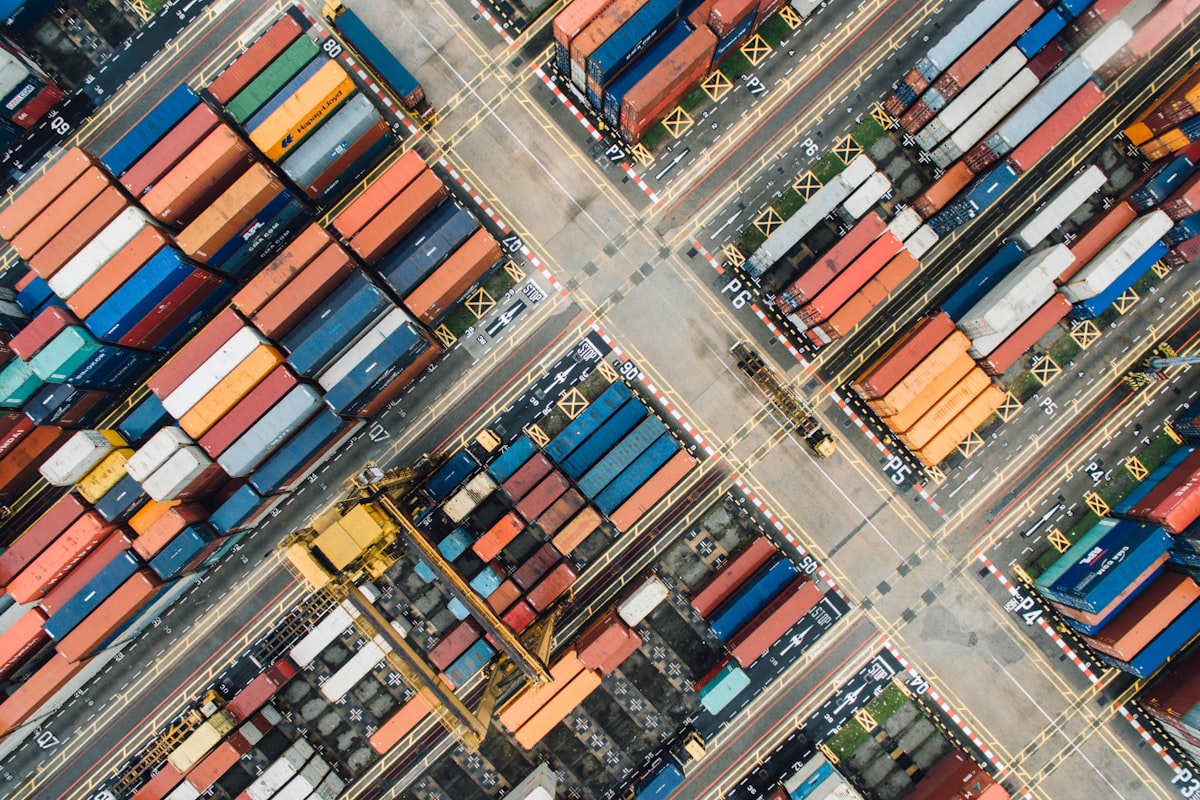
What a Room Full of CEOs Said About Tariffs — and What It Means for Your Supply Chain
I recently chaired a senior executive peer group session on US tariffs and geopolitical turbulence. The conversations that happen in these rooms — candid, unfiltered — reveal what business leaders are actually doing, not just what they say publicly.
Read → -
Why Strategic Plans Fail Before They Start
I chaired a peer session on strategic planning and execution recently. Within twenty minutes, the conversation had shifted from frameworks and tools to the human reasons strategies fail. That's usually where the truth is.
Read → -
Why Supply Chain Resilience Is the New Competitive Moat
For decades, supply chain efficiency was the game. Lean inventories, just-in-time delivery, and cost arbitrage defined who won. Then the world reminded us that efficiency and resilience are not the same thing.
Read → -

Five Lessons from Digital Transformation That Business Schools Don't Teach
After two decades of digital transformation work across industries, I've noticed a gap between what gets taught in classrooms and what actually determines whether transformation succeeds or fails.
Read → -
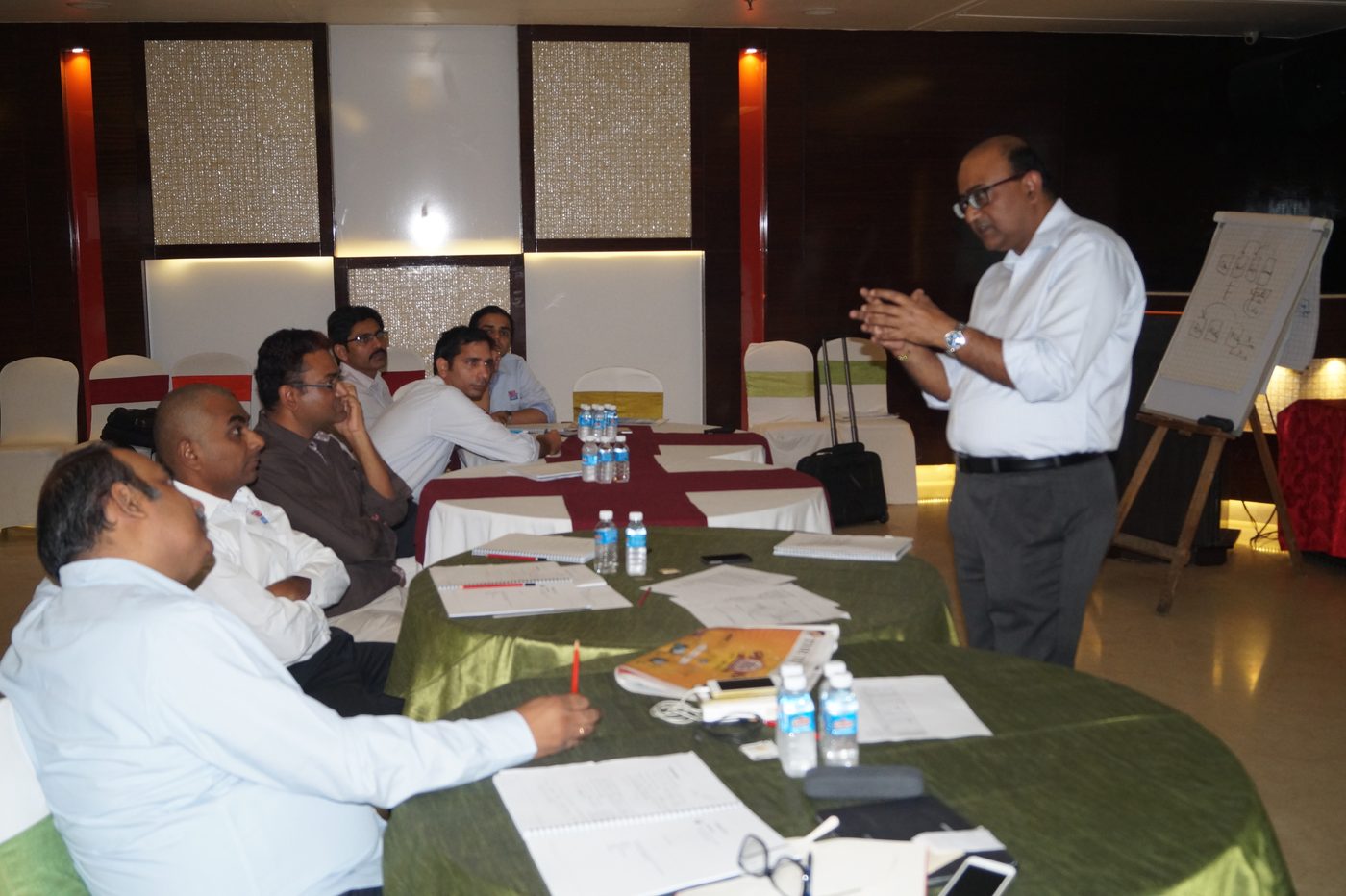
The Leadership Learning Trap: Why Most Executive Education Fails
Most executive development follows a model designed for students, not practitioners. After a decade of building programs for senior leaders, here's what I've learned about what actually works.
Read → -
When Geopolitics Enters Your Supply Chain
The US semiconductor export controls of 2022 were a warning shot. Geopolitical risk has moved from the foreign affairs desk to the boardroom supply chain agenda. Here's how to think about it.
Read → -

Sustainability Is Not Your CSR Team's Problem Anymore
COP commitments are becoming regulatory requirements. Supply chains carry 70–80% of most companies' emissions. The leaders who treat this as a reporting exercise will be left behind.
Read → -
China Plus One: The Resilience Imperative Every Leader Should Understand
COVID exposed the fragility of single-source, single-geography supply chains. The China Plus One strategy has become the most widely discussed response — but executing it well is harder than it sounds.
Read →
Musings
Short takes, observations, and things I couldn't stop thinking about — originally shared on LinkedIn.
AI adoption isn’t a technology challenge. It’s a mental model challenge.
Integrating LLMs into my work over the last few months has reinforced two critical shifts organisations need to make.
From Micromanagement to Delegation. When working with AI, give broad, contextual instructions on the expected outcome and trust the model to execute. Shift from managing tasks to managing outcomes.
From Process to Outcome — the JTBD shift. My brain naturally defaults to SIPOC: inputs, steps, hand-offs. But forcing this process-first framework onto GenAI is exactly what trips people up.
Consider creating a presentation. The SIPOC mindset: you act as a slide factory manager, deeply embedded in the mechanics of how. The JTBD mindset: you prompt the ultimate outcome — “Make me look prepared and persuasive for tomorrow’s board meeting.” The prompt is a declaration of intent, not a step-by-step manual.
Mapping LLMs onto old, sequential process flows gives incremental gains at best — and massive frustration at worst.
Stop asking: “How do we automate the specific steps in our current workflow?”
Start asking: “What is the core progress our user is trying to make, and what outcome are we hiring this intelligence to deliver?”
SIPOC ensures you execute steps correctly. JTBD ensures you build the right thing. AI excels when we feed it the why and let it figure out the how.
We keep asking: “Are you using AI in your work?”
The better question is: “Are you thinking better because of AI?”
There is a meaningful difference. A hammer in the hands of someone who doesn’t understand structures can still knock down walls — just not always the right ones.
I’ve been watching organisations roll out AI tools at scale. Copilots, summarisers, code assistants, procurement bots. The productivity numbers look good in the first 90 days.
What I’m less certain about is whether people are developing the judgment to know when the AI output is wrong, why a prompt is producing shallow answers, or what question they should actually be asking before they type anything.
AI amplifies thinking. It doesn’t replace it. If you feed shallow thinking into a powerful model, you get confident-sounding shallow output — faster than ever before.
The skills that matter now: knowing how to frame a problem before asking for solutions. Knowing how to interrogate an answer. Knowing when to trust the pattern and when to question it.
Systems thinking. Critical thinking. The ability to connect dots.
These are not soft skills. They are the hard skills of the AI age.
This insight came while developing an SMU Academy course on global trade.
The new regulations, tariff and non-tariff barriers, and sanctions of recent years have been a masterclass in engineering a move from free trade to an increasingly siloed world. Quite disturbing, actually.
The key realisation: decisions about trade flows and compliance can no longer be considered operational or tactical. They are forcing structural change — and they need their due seat at the strategy and board level. Direct implications for rethinking market focus, supply networks, and product design.
Another uncomfortable insight: customs processes worldwide are increasingly moving towards a “Guilty until proven Innocent” mode — zero tolerance on customs valuation and regulatory compliance violations. This puts enormous emphasis on having strong technology capability: visibility, evidence in the form of certificates, and the ability to analyse supply chain impacts in an ever-changing landscape.
The challenge is compounded by the highly fragmented nature of our trade flows, with stakeholders operating at very different levels of digital maturity.
Most organisations are still treating trade compliance as an operational problem.
The leaders who will navigate this well are those who bring it to the strategy table — and build the systems to manage it before the next disruption hits.
With everyone talking AI, I’ve developed a renewed interest in systems dynamics. That got me thinking — can we view the rising interest in systems thinking as a balancing loop: a natural corrective response to the reinforcing loop of trying to solve everything with AI?
Think of the current AI explosion as a reinforcing loop. We feed the AI engine more data to optimise specific outcomes. It gets better at that narrow task, leading to more reliance, generating more data, narrowing the focus further. Strong potential to lead us down a rabbit hole. Linear thinking on steroids.
Systems thinking acts as a balancing loop — pushing us to ask: what is the AI engine missing? How does this recommendation impact other outcomes? It acts as a check and balance against the AI black box.
By applying systems thinking, we introduce a delay in the loop — a pause that allows human judgement to assess whether AI’s “efficient” recommendation is also resilient.
Jay Forrester’s Industrial Dynamics introduced me to systems dynamics decades ago. The knack of viewing things holistically, finding patterns, understanding feedback loops, connecting the dots — it has stayed with me through every role I’ve held.
In the AI age, that capability isn’t becoming less important. It is becoming the most important capability we have.
Systems thinking serves as a vital safeguard: while AI can find the fastest path, systems thinking ensures it’s a path worth taking for the health of the whole.
Watching the escalation in the Strait of Hormuz, one thought keeps returning: the most sophisticated supply chains in the world are still bound by the reality of geography.
With a 39 km strip of water becoming a choke point, the global economy isn’t just slowing down — it is beginning to suffocate.
I looked back at history. The struggle to control narrow passages has been a central theme in trade for centuries. The fall of Constantinople in 1453, the Ottomans taxing Europe’s trade routes, Portugal and Spain’s pivot to the Atlantic — they didn’t explore because they wanted adventure. They did it because they were geographically disadvantaged. That was a classic systemic transition: the world moved from a land-based network to a maritime-based one.
Through a systems thinking lens, geographic choke points are the ultimate leverage points in complex, global supply chains. A disturbance doesn’t stay local — it creates non-linear, cascading effects across the entire network. Rising tanker insurance is just the first-order effect. Prolong the conflict, and you get shifts in manufacturing lead times in Asia, a spike in energy costs in Europe, and finally inflation in the consumer’s wallet worldwide.
The geographical map remains our most vital strategic document.
How are you enabling your teams to shift from linear thinking (A causes B) to systemic thinking (A triggers a wave that changes the environment for C and D)?