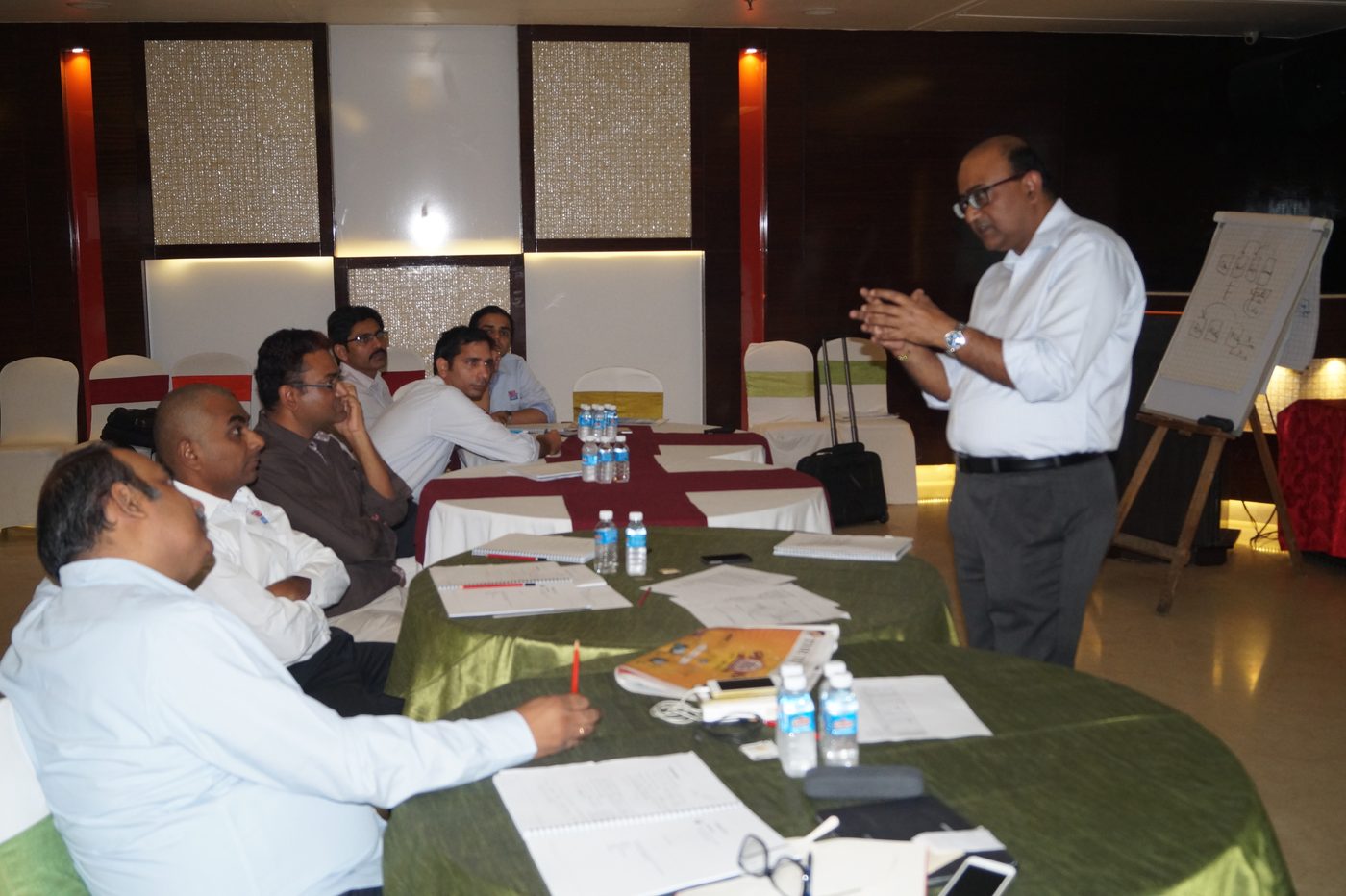
There’s a conversation I have regularly with senior executives who’ve just attended a leadership program. It goes something like this: “The content was excellent. The faculty were brilliant. But honestly, Kaushik, I’m not sure what I’m going to do differently on Monday morning.”
That’s the leadership learning trap.
The Model We Inherited
Most executive education is built on a model designed for full-time students. You read. You listen to lectures. You discuss cases. You write an exam. You receive a certificate.
This works reasonably well for someone who has six months to study operations management. It works poorly for a VP of Supply Chain who has forty emails to answer before lunch and a quarterly review in two hours.
The problem isn’t motivation. Executives are highly motivated learners. The problem is architecture. The traditional model assumes that knowledge transfer leads to capability, and that capability leads to behavior change. In my experience — running programs across Asia for over a decade — this chain breaks at almost every link.
Why the Chain Breaks
First: knowledge transfer at the expense of context. When a participant hears a lecture on demand planning methodology, they understand the theory. But they don’t yet feel why it matters, because they haven’t yet experienced the pain of a wrong forecast destroying a quarter. The theory arrives before the problem.
Second: passive consumption doesn’t build muscle. Leadership, like any complex skill, requires practice under pressure. You don’t learn to drive by watching someone else drive. You don’t build commercial judgment by reading about it. Yet most programs are still primarily about watching and reading.
Third: the transfer problem. Learning in a classroom environment creates a kind of “classroom self” that operates quite differently from the pressured, interrupted, politically complex environment back at work. What feels clear in a seminar room becomes foggy when you’re back in the office.
What Actually Works: Flipping the Sequence
Over the years, I’ve moved toward a fundamentally different approach — one I call experience first, framework second.
Instead of introducing theory and then asking people to apply it, I put participants into a challenging scenario immediately. They make decisions. They face consequences — often uncomfortable ones. Only then do I introduce the conceptual framework that explains what just happened.
This sounds simple. The effect is profound.
When a participant has just made a poor procurement decision in a supply chain simulation and watched their service level collapse as a result, they are hungry for the explanation. The theory doesn’t feel academic. It feels like the answer to a question they are urgently asking.
The Role of Simulation
This is where well-designed simulation games become powerful tools, not gimmicks. I use programmes like The Fresh Connection — a supply chain business simulation used by leading universities and corporations worldwide — precisely because they compress time, amplify consequences, and create the kind of emotional engagement that makes learning stick.
In a two-day programme using simulation, participants typically:
- Experience the consequences of siloed decision-making
- Feel the pressure of competing objectives across functions
- Discover why alignment across the organisation is harder than the org chart suggests
- And then — critically — discuss frameworks that now have real meaning, because they’ve just lived the problem
What Leaders Should Demand
If you’re investing in leadership development for your team, I’d encourage you to ask a simple question of any programme you’re evaluating: where does the experience happen?
If the answer is “the case study” or “the role play at the end of day two,” push harder. Look for programmes that put participants in the arena early, that create the discomfort of real complexity, and that use theory to illuminate lived experience rather than to preempt it.
The goal of executive education is not what people know when they leave the room. It’s what they do differently the following Monday morning.
That’s the question every programme should be designed to answer.
Kaushik Ghatak is an executive educator, coach, and advisor. He runs capability development programmes for senior leaders across Asia, using experiential and simulation-based approaches.